
Financial Projections for Startups: A Simple Step by Step Guide
Master the art of startup financial projections with this guide covering P&L statements, cash flow forecasts, and SBA requirements.
Founders often view financial modeling as a daunting hurdle. However, accurate startup financial projections serve as the roadmap for your entire venture. These numbers tell the story of your potential and prove your viability to lenders.
Do you want to secure capital or scale your operations? You must master the art of the forecast. This guide simplifies the process into actionable steps for every US entrepreneur.
Why do startup financial projections matter?
Investors look for more than just a great idea: they look for a return on investment. Clear projections demonstrate your grasp of the market and your operational costs. Without these figures, your business remains a hobby rather than a scalable enterprise.
The Small Business Administration, or SBA, requires these documents for most loan programs. Projections allow you to anticipate "dry spells" and plan for aggressive growth. You gain the confidence to make hires and purchase equipment when you know your future balance.
What goes into a winning business financial plan?
A robust business financial plan combines historical data with educated guesses. You should focus on three to five years of future performance. Start with your revenue assumptions: how many units will you sell in USD?
Include your "burn rate," which represents the amount of cash you spend each month. This figure helps you determine your "runway" or how long you can survive before needing a profit. You must account for every line item: from marketing spend to office supplies.
How do you build a P&L for startups?
The P&L for startups, or Profit and Loss statement, summarizes your total revenue and expenses. You calculate your gross margin by subtracting the cost of goods sold from your total sales. This percentage reveals the fundamental health of your product or service.
Operating expenses follow the gross margin section. These include salaries, insurance, and rent payments. Finally, you arrive at your net income: the "bottom line" that proves your startup can actually generate wealth.
Why is a cash flow forecast critical for survival?
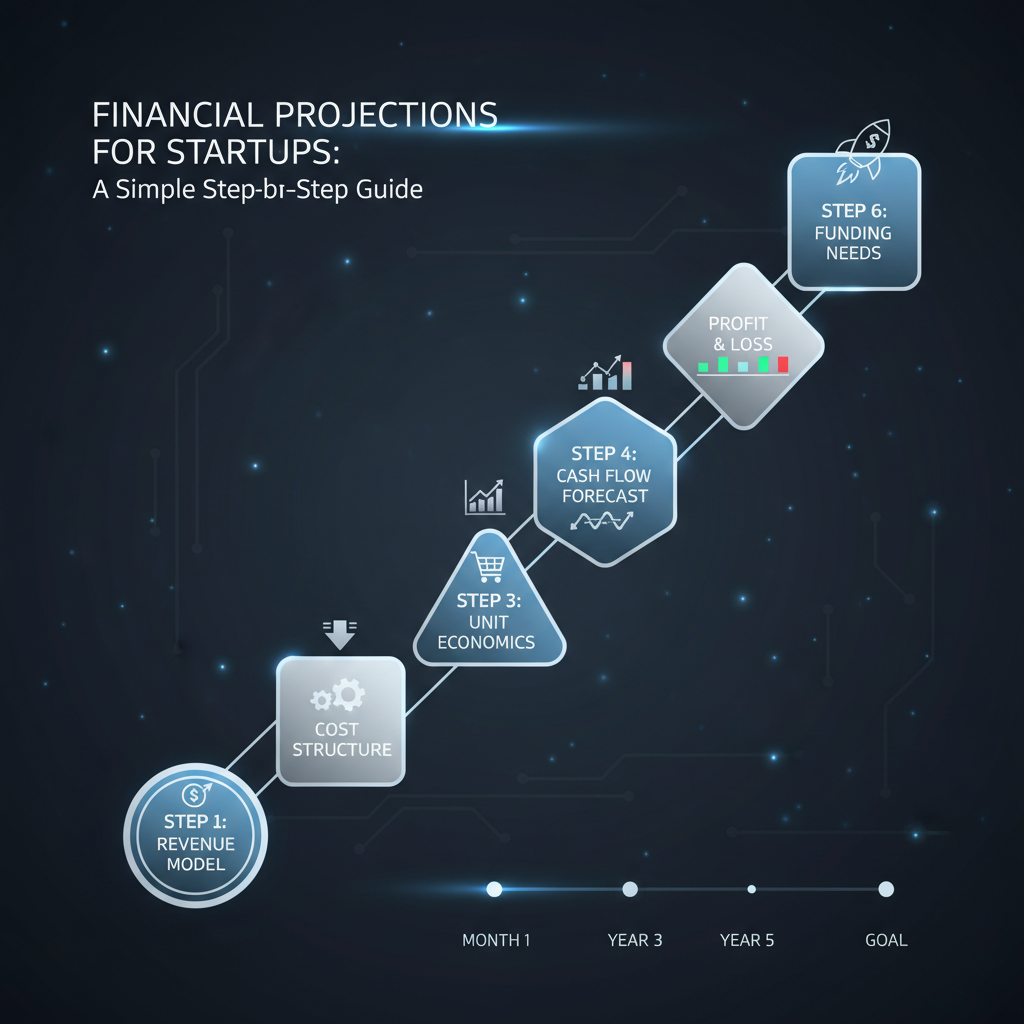
Profitability does not always mean you have cash in the bank. A cash flow forecast tracks the actual timing of every dollar that enters or exits your business. You might book a massive sale in January but receive the USD payment in April.
This timing gap can sink a young company if you lack the reserves to pay your staff. Your forecast helps you identify these gaps before they become crises. You can then secure a line of credit or adjust your payment terms to stay solvent.
How does the SBA view your financial model?
The SBA expects realistic and conservative estimates. They compare your startup financial projections against industry averages to ensure your goals remain grounded. If your margins look too high compared to similar firms, you must provide a detailed explanation.
Include a "Sources and Uses of Funds" statement in your package. This tells the lender exactly how much money you need and how you will spend it. Transparency builds the trust necessary to secure government-backed financing.
Where can you find a startup business plan template?
You do not need to build your spreadsheets from scratch. Many founders use a startup business plan template to organize their data. These templates often include pre-built formulas for P&L statements and cash flow charts.
Choose a template that aligns with US accounting standards, specifically GAAP. This ensures your documents look professional to bankers and venture capitalists alike. Once you fill in your unique numbers, you possess a powerful tool for your next pitch.